
Brad Haubrich, PhD
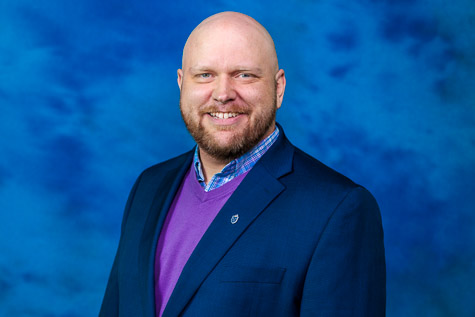
Dr. Haubrich joined the Basic Sciences faculty at Touro University Nevada in 2020. Prior to joining Touro, he completed postdoctoral fellowships at the Institute for Rare and Neglected Diseases Drug Discovery (iRND3) in Mountain View, California, and Bryant University in Smithfield, Rhode Island, where his research focused on assay development and the discovery of new therapeutics for infectious diseases.
Dr. Haubrich’s research lies at the intersection of chemistry, biochemistry, and infectious disease, with an emphasis on drug discovery for eukaryotic pathogens. The Haubrich Lab develops and applies phenotypic and biochemical assays to identify and characterize potential therapeutics, investigate mechanisms of action, evaluate drug repurposing opportunities, and identify new therapeutic targets. The research program studies diverse aspects of pathogen biology, including protein kinases, NAD homeostasis, lipid metabolism, and cell wall structure, with the goal of identifying vulnerabilities that can be exploited therapeutically.
Mentorship is an integral part of the Haubrich Lab’s research program. Dr. Haubrich has mentored dozens of Touro University Nevada students on a wide range of infectious disease research projects, both inside and outside the laboratory. His students have presented their work at national and international scientific meetings and have received more than 20 awards recognizing their research and scholarly accomplishments.
Professional Profiles: LinkedIn, Google Scholar
- PhD, Chemistry, Texas Tech University, Lubbock TX
- BS, Natural Science, Muhlenberg College, Allentown PA
- Medical Biochemistry
- Molecular and Medical Genetics
- Eukaryotic Pathogen Drug Discovery: The Haubrich Lab investigates small-molecule therapeutics for medically important eukaryotic pathogens, with an emphasis on antiparasitic and antifungal drug discovery. Our research integrates phenotypic screening, biochemical pharmacology, and structure -activity and -kinetic relationships (SARs and SKRs) to identify and characterize compounds with promising antimicrobial activity and to explore opportunities for drug repurposing and development.
- Molecular Mechanisms of Action (MMOAs) and Binding Kinetics: We investigate the MMOAs underlying antimicrobial activity, with particular interest in the kinetics of drug–target interactions. Our work examines time-dependent and pseudoirreversible inhibition and how prolonged target engagement can influence pharmacological activity beyond what is captured by traditional equilibrium measures of potency.
- Post-Antimicrobial Effects and Durable Drug Action: We are particularly interested in pharmacological effects that persist after extracellular drug concentrations decline, including post-antimicrobial effects and their relationships to target engagement, binding kinetics, and MMOA. By examining both the magnitude and duration of drug action, our research seeks to better understand how the temporal pharmacology of antimicrobial compounds can inform the discovery and development of therapies for eukaryotic infectious diseases.
- Hernandez J, Duval J, Rauff T, Hall E, Gallati M, Haubrich BA, Thoma M, Aponte E, Basu A, DeGiorgis JA, Reid CW. A Lyt at the end of the tunnel? Unraveling the complex interaction of the N-acetylglucoasminidase LytG in cell wall metabolism. RSC Chem Biol 2025. 6, 1848-1860. doi: 10.1039/d5cb00151j. PMID: 41070187.
- Liu B, Schnider A, DeArmond M, Banach DB, Haubrich BA. Cryptosporidiosis in individuals with inflammatory bowel disease: A scoping review protocol. BMJ Open 2024. 14(10), e086529. doi: 10.1136/bmjopen-2024-086529. PMID: 39414295.
- Syphers JL, Xue L, Yi X, Wang RE, Haubrich BA. Meeting proceedings from ICBS 2022-Uncovering solutions for diseases. ACS Chem Biol 2023. 18(7), 1447-1459. doi: 10.1021/acschembio.3c00205. PMID: 37310212.
- Haubrich BA, Nayyab S, Gallati M, Hernandez J, Williams C, Whitman A, Zimmerman T, Li Q, Chen Y, Zhou C-S, Basu A, Reid CW. Inhibition of Streptococcus pneumoniae growth by masarimycin. Microbiology 2022. 168(4), 001182. doi: 10.1099/mic.0.001182. PMID: 35467499.
- Haubrich BA, Ramesha C, Swinney DC. Assay development and screening using a bioluminescent enzyme assay for NAD biosynthesis by nicotinamide mononucleotide adenylyltransferase 1 (NMNAT1). SLAS Discov. 2020. 25, 33-42. doi: 10.1177/2472555219879644; PMID: 31583955.
- Roohani K, Haubrich BA, Yue K-Lug, D’Souza N, Montalbano Aug, Rynearson T, Menden-Deuer S, Reid CW. Trophic upgrading and mobilization of wax esters in microzooplankton. PeerJ 2019. 7, e7549. doi: 10.7717/peerj.7549; PMID: 31489268.
- Haubrich BA. Microbial sterolomics as a chemical biology tool. Molecules 2018. 23(11), 2768. doi: 10.3390/molecules23112768; PMID: 30366429.
- Haubrich BA, Swinney DC. Enzyme activity assays for protein kinases: Strategies to identify active substrates. Curr Drug Discov Tech 2016. 13, 2-15. doi: 10.2174/1570163813666160115125930; PMID: 26768716.
- Swinney ZT, Haubrich BA, Xia S, Ramesha C, Gomez SR, Guyett P, Mensa-Wilmot K, Swinney DC. A four-point screening method for assessing molecular mechanism of action (MMOA) identifies tideglusib as a time-dependent inhibitor of Trypanosoma brucei GSK3β. PLoS Negl Trop Dis 2016. 10(3): e0004506. doi: 10.1371/journal.pntd.0004506; PMID: 26942720.
- Swinney DC, Haubrich BA, Van Liefde I, Vauquelin G. The role of binding kinetics in GPCR drug discovery. Curr Top Med Chem 2015. 15, 2504-2522. doi: 10.2174/1568026615666150701113054; PMID: 26126905.
- Leaver DJ, Patkar P, Singha UK, Miller MB, Haubrich BA, Chaudhuri M, Nes WD. Fluorinated sterols are suicide inhibitors of ergosterol biosynthesis and growth in Trypanosoma brucei. Chem Biol 2015. 22, 1374-1383. doi: 10.1016/j.chembiol.2015.08.017; PMID: 26496686.
- Haubrich BA, Singha UK, Miller MB, Nes CR, Anyatonwu H, Lecordier L, Patkar P, Leaver DJ, Villalta F, Vanhollebeke B, Chaudhuri M, Nes WD. Discovery of an ergosterol-signaling factor that regulates Trypanosoma brucei growth. J Lipid Res 2015. 56, 331-341. doi: 10.1194/jlr.M054643; PMID: 25424002.
- Haubrich BA, Collins EK, Howard AL, Wang Q, Snell WJ, Miller MB, Thomas CD, Pleasant SK, Nes WD. Characterization, mutagenesis and mechanistic analysis of an ancient algal C24-methyltransferase: Implications for sterol biosynthesis in the green lineage. Phytochemistry 2015. 113, 64-72. doi: 10.1016/j.phytochem.2014.07.019; PMID: 25132279.
- Santori FR, Huang P, van de Pavert SA, Douglass Jr. EF, Leaver DJ, Haubrich BA, Keber R, Lorbek G, Konijn T, Rosales BN, Rozman D, Horvat S, Rahier A, Mebius RE, Rastinejad F, Nes WD, Littmann DR. Identification of natural RORγ ligands that regulate the development of lymphoid cells. Cell Metab 2015. 21, 286-297. doi: 10.1016/j.cmet.2015.01.004; PMID: 25651181.
- Patkar P, Haubrich BA, Qi M, Nguyen TTM, Thomas CD, Nes WD. C24-Methylation of 26-fluorocycloartenols by recombinant sterol C24-methyltransferase from soybean: Evidence for channel switching and its phylogenetic implications. Biochem J 2013. 456, 253-262. doi: 10.1042/BJ20121818; PMID: 23984880.
- Miller MB, Haubrich BA, Wang Q, Snell WJ, Nes WD. Evolutionarily conserved ∆25(27)-olefin ergosterol biosynthesis pathway in the alga Chlamydomonas reinhardtii. J Lipid Res 2012. 53, 1636-1645. doi: 10.1194/jlr.M027482; PMID: 22591742.
- International Chemical Biology Society (ICBS)
- American Society for Microbiology (ASM)
- American Chemical Society (ACS)
- BioTech Vegas
- International Association of Medical Science Educators (IAMSE)
- Wilderness Medical Society (WMS)
- Pediatric Infectious Disease Society (PIDS)
- Southern Nevada Infectious Disease Society (SNIDS)
