Michael Tang Regional Center for Clinical Simulation
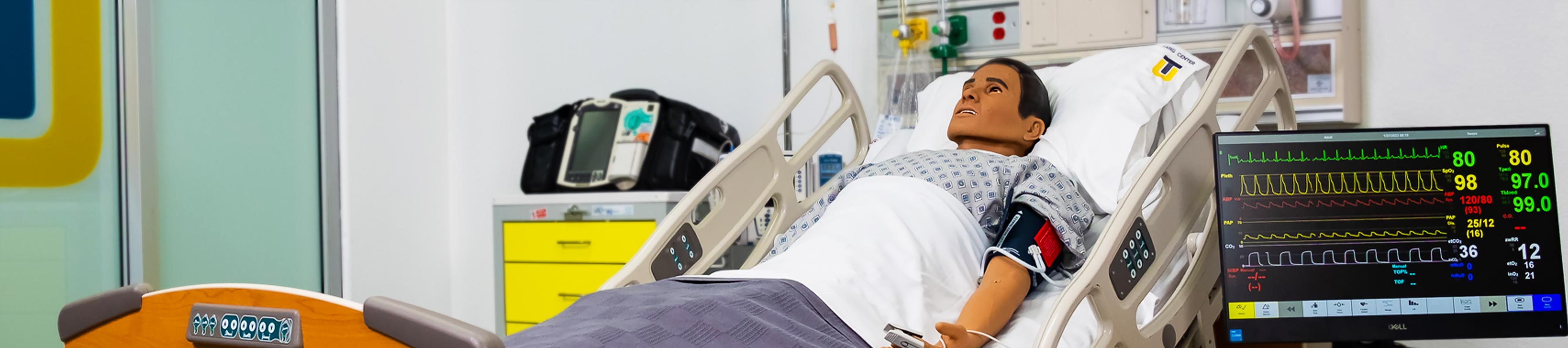
In our state-of-the-art medical simulation facility, we provide realistic learning opportunities for the next generation of healthcare providers. You will develop your medical knowledge, patient care, professionalism, and communications skills in our educational center.
Our Mission & Vision
The Mission of the Touro University Clinical Simulation Centers is:
To develop, deliver, and evaluate healthcare simulation education and training activities for students, faculty, staff, and clinical practitioners through simulation techniques, training technology, and practice assessment to enhance competencies and strengthen collaborative practice.
The Vision of the Touro University Clinical Simulation Centers is:
To empower learners by advancing their clinical skills proficiency and confidence through simulation-based education.
The Basic Assumption
We believe that everyone participating in activities at Touro University Nevada is intelligent, capable, cares about doing their best and wants to improve.™ - The Center for Medical Simulation
Accreditation
The Michael Tang Regional Center for Clinical Simulation (Center) has been awarded full accreditation from The Society for Simulation in Healthcare (SSH) in Teaching/Education, a recognition currently held by 246 simulation programs around the world.
Facilities & Training
The Touro University Nevada Tang Center is a 27,000-square-foot facility designed to support high-volume simulation and clinical skills training across a wide range of disciplines and learner levels.
Facilities
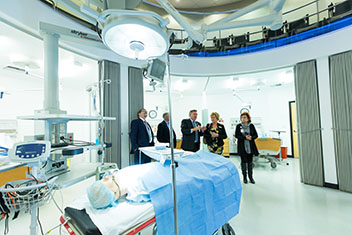
- Six-bed multifunctional hospital unit with an observation deck, supporting multi-patient scenarios and interprofessional education
- Three high-fidelity simulation suites, each featuring:
- An attached control room
- A dedicated debriefing room
- Flexible configurations for inpatient, emergency, and specialty-focused environments
- Special population high-fidelity simulation suite with three beds and an attached control room
- 20 standardized patient (OSCE) rooms equipped with integrated audiovisual capture systems
- OptumCare Ultrasound Training Facility with 25 convertible ultrasound beds
- Twenty additional rooms dedicated to virtual reality (VR) and alternate training modalities
- 50-person common area along with a small kitchen and private lounge for standardized patients
- 75 seat lecture hall
- Three debriefing rooms
During periods of high training volume, the center utilizes additional campus spaces to support expanded programming, including:
- Interdisciplinary (IDL) Lab (capacity: 68)
- Osteopathic Manipulative Medicine (OMM) Lab (capacity: 90)
- Large debriefing room (capacity: 50)
These spaces are used for debriefing, pre-briefing, faculty development, and large-scale simulation activities.
Training Equipment
- Abdominal Exam Trainers
- Automated External Defibrillator (AED) Trainer
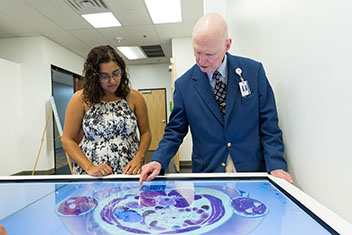
- Anatomage Table
- Arterial Line Puncture Trainer
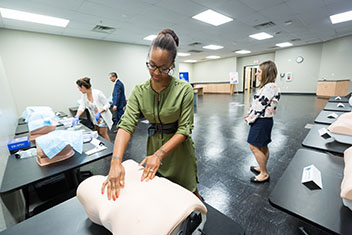
- Breast Examination Trainer
- Catheterization Trainer
- Central Line Catheterization Trainer
- Central Venous Catheterization
- Chest Tube Trainer
- Clinical Female Pelvic Trainer
- Clinical Male Pelvic Trainer
- CPR Manikins
- Cricothyrotomy and Tracheostomy
- Diagnostic Bluetooth Auscultation Trainer (DxBat)
- Ear Examination Trainer
- Episiotomy Trainer
- Eye Examination Trainer
- Intubation Trainers
- Intraosseous (IO) Trainers
- Knee Aspiration and Injection Trainers
- Lumbar and Epidural Trainer
- Mediolateral Perineal Repair Trainer
- Nursing Anne Simulator
- Pediatric Manikins
- Pediatric Auscultation Manikin
- Pericardiocentesis Simulator with Chest Tube and Pneumothorax
- PROMPT FLEX Birthing Task Trainer
- Rectal Examination Trainer
- Shoulder Injection Trainer
- SimMan 3G
- SimMan 3g Plus
- SimMan Essential
- Simulated Ventilator System Trainer
- Standardized Patients
- Static Manikins
- Student Auscultation Trainer
- Tourniquet Trainers
- Tracheostomy Trainer
- Venipuncture Arm Task Trainer
- Victoria Obstetric Simulator
- Wound Packing
CPR Certification Courses
The Simulation Center offers American Heart Association (AHA) certified courses through the RQI (Resuscitation Quality Improvement) platform. These courses are open to the public and are designed for both healthcare professionals and community members who are seeking high-quality, flexible CPR certification.
Available Courses
Basic Cardiac Life Support (BLS)
Learn how to react in life-threatening emergencies with the proper basic life-saving skills. This course is available upon request.
Advanced Cardiac Life Support (ACLS)
Be prepared to care for a patient experiencing a cardiac emergency with the advanced techniques taught in this course available upon request.
Pediatric Advance Life Support (PALS)
Be prepared to care for a pediatric patient experiencing a cardiac emergency with the advanced techniques taught in this course available upon request.
How it Works
- Online Coursework: Complete the AHA-approved online module at your convenience (approx. 90 minutes).
- In-Person Skills Session: Schedule a 15-30-minute hands-on session at our state-of-the-art simulation center. The RQI system provides real-time feedback to ensure skill mastery.
- Receive Your Certification: Upon successful completion, your official AHA eCard will be issued.
Registration Process
- Register for your desired course(s) and complete checkout.
- You will receive an email confirmation of your course(s) and payment.
- We will assign you to your course(s).
- You will receive an email from RQI with instructions on how to reserve your hands-on session.
SSH Accredited
In 2024, Touro University Nevada’s Michael Tang Regional Center for Clinical Simulation became the first fully SSH-accredited simulation center in Nevada.
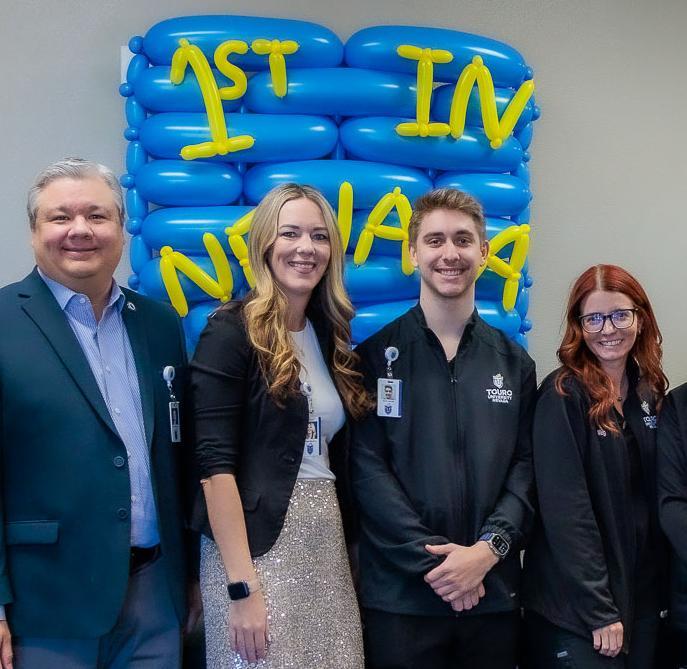
“This accreditation only reinforces the commitment we have to providing the highest quality learning experience possible."
Casey Maurice Director, Michael Tang Regional Center for Clinical Simulation
Tang Center Forms, Guides, & Resources
- Tang Immersive Simulation Pre-Brief Guide
- PEARLS Debriefing Framework
- Tang Recording Policy and Consent
- Tang Confidentiality Agreement
Standardized Patient Experience
Touro Nevada uses standardized patients as a simulation tool to teach and evaluate our students. A Standardized Patient is a person who is trained to portray a patient in a medical scenario by acting out the symptoms, characteristics, and concerns of a real patient. The standardized patient is given a case based on a real patient and is interviewed or examined as if in a doctor's office or clinic.
Contact Us
Michael Tang Regional Center for Clinical Simulation
